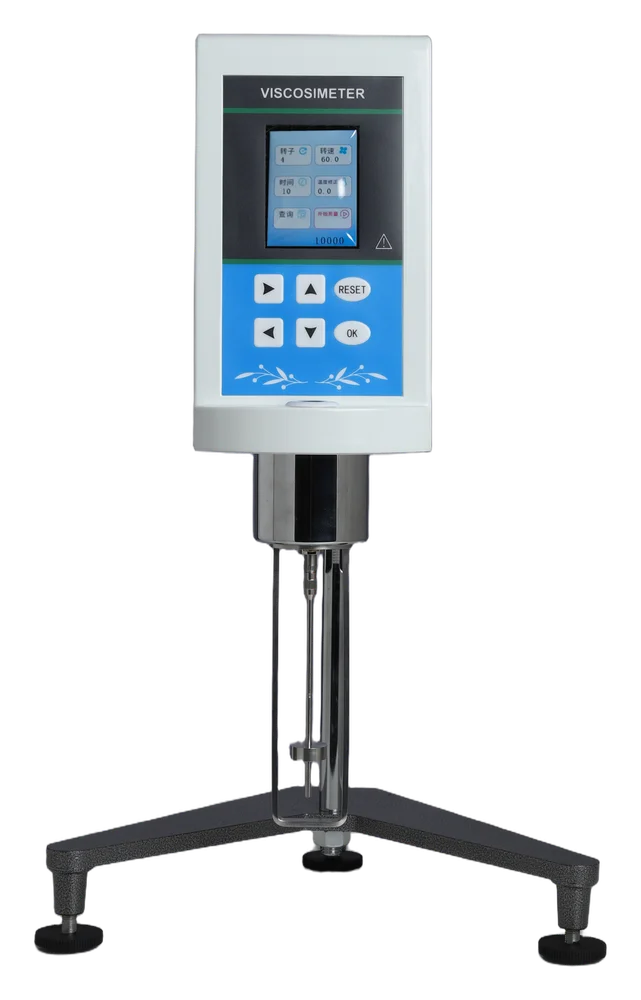
SNB-2
Digital Rotational Viscometer
Eight selectable speeds, including low-speed settings, with a color display and Nos. 1–4 spindles for rotational viscosity testing.

Viscosity basics
Understand the units, work through a conversion example and choose between rotational and capillary workflows without mixing unlike results.

Dynamic and kinematic viscosity describe related quantities, but their numerical values are not interchangeable. Check the unit before comparing a supplier's specification with a laboratory result. A number written simply as “viscosity: 100” leaves a purchasing team without enough information to select a method.
Dynamic viscosity relates shear stress to shear rate. Kinematic viscosity is dynamic viscosity divided by density. Common practical unit relationships are 1 cP = 1 mPa·s and 1 cSt = 1 mm²/s. For these units, dynamic viscosity in cP equals kinematic viscosity in cSt multiplied by density in g/cm³. [1]
Put the full unit in every worksheet column and purchasing specification. We suggest keeping the original supplier value next to any converted value, with a separate field for the density source. That way, a later reviewer can reconstruct the calculation without searching through emails.
Consider a hypothetical Newtonian oil measured at one agreed temperature:
The inverse calculation is 85 ÷ 0.85 = 100 cSt. These are illustrative numbers, not a reference-fluid certificate or a Measight instrument reading. A spreadsheet can keep the three inputs visible and label the result “calculated” to distinguish it from the directly measured quantity.
ASTM D445 describes a calibrated glass-capillary procedure for kinematic viscosity of liquid petroleum products; its public scope also states the density relationship used to calculate dynamic viscosity. Consult the full current method for its requirements and applicability. [2]
In our catalog, SYA-265C and SYA-265D list mm²/s, temperature control from room temperature to 100 °C, four test positions and eight supplied capillaries. Before ordering, request the capillary sizes, constants, calibration documentation and the complete configuration for your required method. Those catalog fields alone do not establish conformity with ASTM D445.
For a rotational dynamic-viscosity workflow, SNB-2 is a separate candidate to discuss. Converting a unit does not make two different experimental procedures equivalent. For a shear-dependent material, retain the geometry and shear conditions; one converted number does not describe all of its flow behavior. [1]
Our recommended inquiry format is: material, required method, original result and unit, test temperature, expected range and available sample quantity. If a conversion is part of the workflow, include how density will be obtained. Attach the existing report with its original headings intact. This gives both your laboratory and the instrument supplier a shared description of what must be measured.
Yes. They express the same dynamic viscosity. Similarly, 1 cSt equals 1 mm²/s for kinematic viscosity. Converting between dynamic and kinematic viscosity additionally requires density.
Use density at the temperature of the viscosity measurement. A density measured at a different temperature does not supply the matching condition for the conversion.
Sources explain measurement principles and methods. Measight configurations are described separately in the linked product pages.
Digital Rotational Viscometer
Eight selectable speeds, including low-speed settings, with a color display and Nos. 1–4 spindles for rotational viscosity testing.
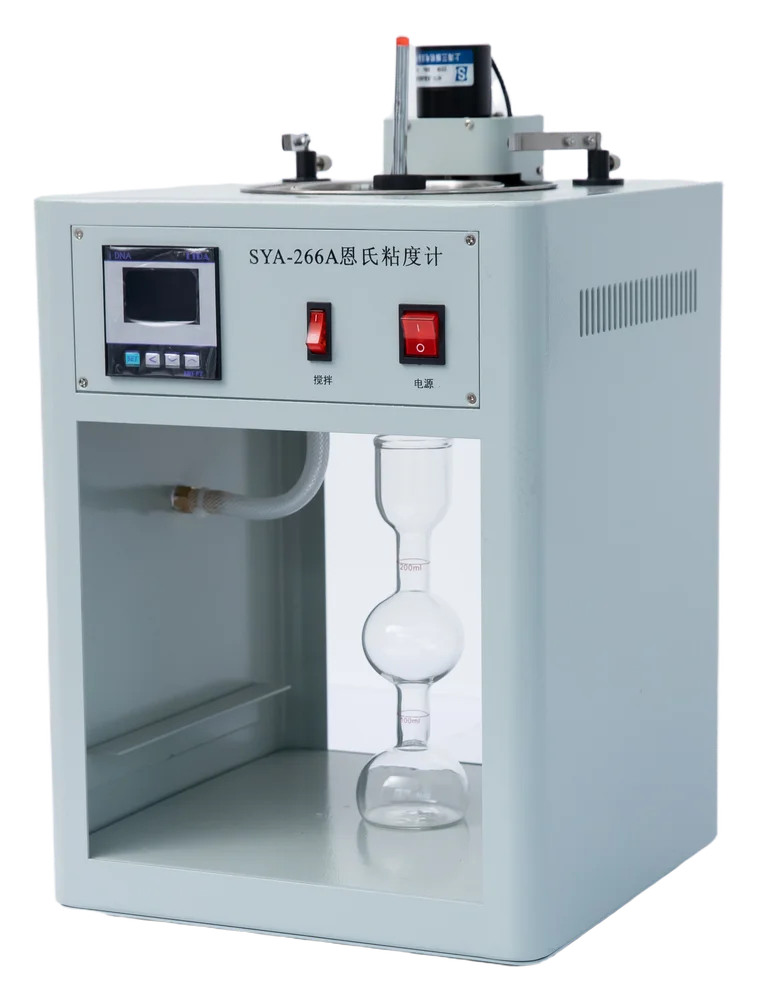
Kinematic Viscometer
A four-position capillary system for kinematic viscosity measurements in mm²/s, with temperature control from room temperature to 100 °C.
Kinematic Viscometer
Kinematic viscosity testing with four test positions and eight supplied capillaries. Includes temperature control from room temperature to 100 °C.