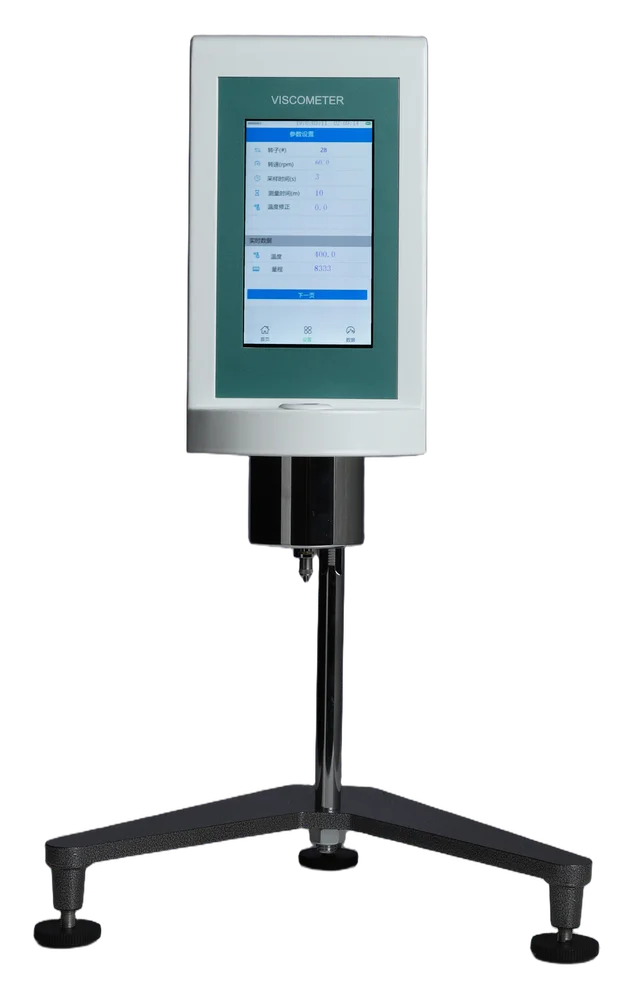
HADV-2
Touchscreen Rotational Viscometer
Touchscreen operation with 0.1–200 rpm speed selection and R2–R7 spindles. Includes a PT100 probe for temperature measurement.

Measurement practice
Separate temperature measurement from temperature control and plan a complete setup for comparable viscosity results.

A viscometer may display temperature while the sample is still being influenced by the room. The first purchasing question is therefore simple: does the proposed equipment measure temperature, control temperature, or provide both functions?
Thermal equilibration involves the sample and measurement system. Temperature gradients or an insufficient equilibration interval can affect rheological results; a target setting is not proof that the entire sample has reached that condition. [1]
The current Measight SNB-2 specification lists 0–200 °C temperature measurement with an optional PT100 probe. SNB-1 and SNB-3 have the same stated option. This is not an integrated heating or cooling claim.
The HADV-2 lists a PT100 probe as standard. That describes what is supplied for measurement, not a built-in sample-temperature controller. In contrast, the SYA-265C entry explicitly lists temperature control from room temperature to 100 °C for its kinematic workflow. These are different specifications and should occupy different lines in a comparison sheet.
Our suggested equipment brief separates four items:
Ask for a configuration drawing or a clear list of the connected parts when the arrangement is unfamiliar. A probe range, bath setting range and instrument operating-environment limit describe different things; they should not be merged into one “temperature range” field on an order.
For method development, we recommend a worksheet with separate columns for the controller setting, observed sample temperature, elapsed time and viscosity reading. This does not prescribe a universal waiting period. It gives your laboratory a place to record the evidence used to choose one for its own procedure.
Agree where the temperature will be observed and when a viscosity result will be recorded. Keep those decisions in the method document so that an operator on another shift uses the same instructions. If the required arrangement cannot maintain the method's condition, resolve that before treating the resulting data as comparable.
Send the target temperature, starting condition, sample quantity, container dimensions and existing temperature-control equipment. State whether the test is performed at a single condition or at several planned temperatures. If the material changes during the test, include that observation in the application brief.
We can then discuss the whole station alongside the viscometer. This is more useful than selecting an instrument from its probe specification and discovering later that the essential control equipment was outside the quotation.
No. This is a temperature-measurement specification. Heating or cooling requires an appropriate control system, and the complete setup must be suitable for the sample and target temperature.
Use the equilibration and timing requirements of your validated method and complete setup. There is no single waiting time that can be assumed suitable for every volume, container and material.
Sources explain measurement principles and methods. Measight configurations are described separately in the linked product pages.
Touchscreen Rotational Viscometer
Touchscreen operation with 0.1–200 rpm speed selection and R2–R7 spindles. Includes a PT100 probe for temperature measurement.
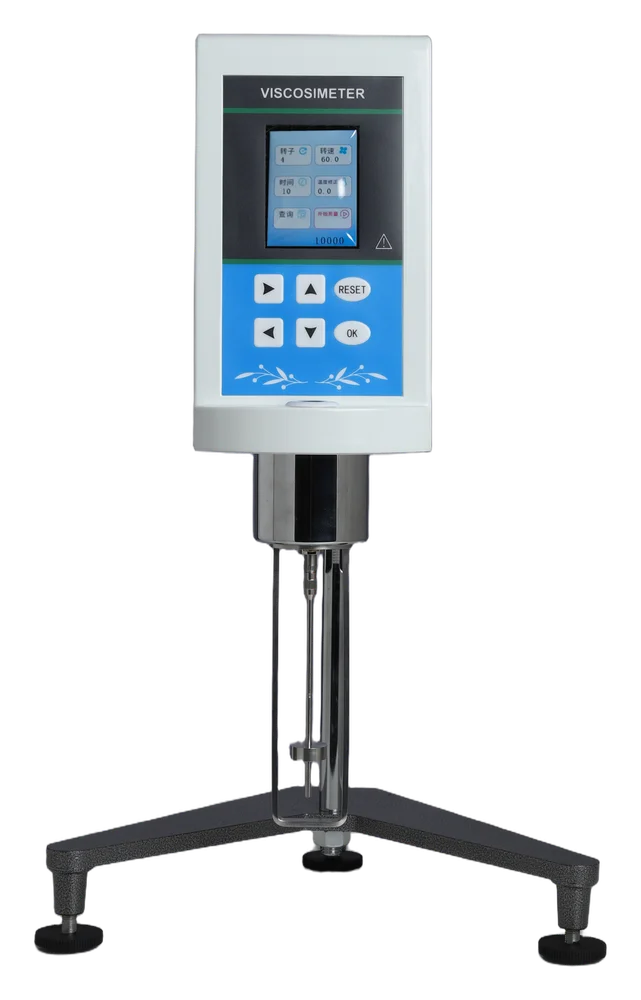
Digital Rotational Viscometer
Eight selectable speeds, including low-speed settings, with a color display and Nos. 1–4 spindles for rotational viscosity testing.
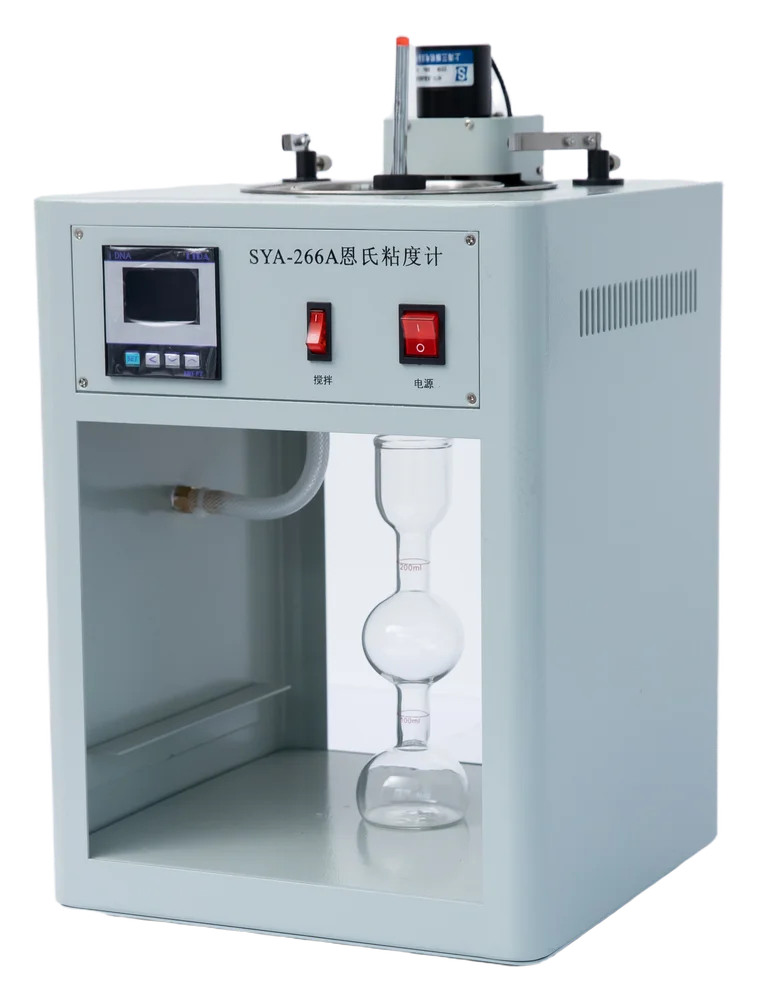
Kinematic Viscometer
A four-position capillary system for kinematic viscosity measurements in mm²/s, with temperature control from room temperature to 100 °C.