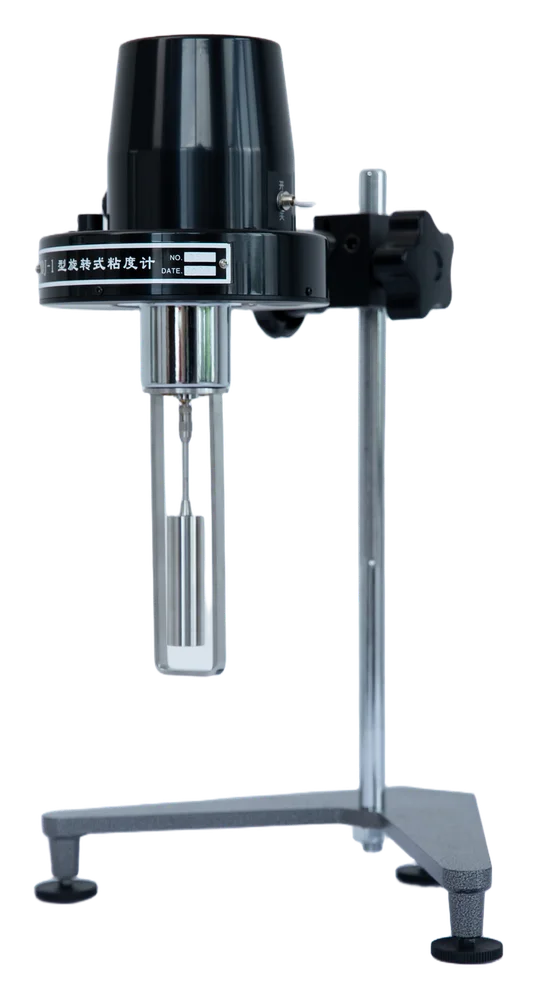
NDJ-1
Analog Pointer Rotational Viscometer
An analog pointer model with four preset speeds for routine rotational viscosity checks using a defined spindle and test procedure.
 Series illustration. Appearance and supplied configuration require confirmation. Screen imagery is illustrative.
Dynamic viscosity
Measight NDJ-4 is an analog pointer rotational viscometer. The reviewed catalog lists a standard range of 10–2,000,000 mPa·s across spindle/speed combinations, with a separate No. 0 option for lower-viscosity measurements. Use the correct spindle/speed factor and method conditions when interpreting a dial reading. Confirm the supplied spindle set and revision-specific acceptance limits.
Values apply to the stated configuration and test conditions.
| No. 0 spindle lower limit | 1 mPa·s |
|---|---|
| Accuracy | ±5% full scale |
| Repeatability | ±2% full scale |
| Preset speeds | 0.3, 0.6, 1.5, 3, 6, 12, 30, 60 |
| Standard spindles | 1, 2, 3, 4 |
| Optional spindles | 0 |
| Operating temperature | 5–35 °C |
| Maximum relative humidity | 80 % RH |
| Input power | AC 100-240 V, 50/60 Hz |
| Viscosity range | 10–2,000,000 mPa·sThe 1 mPa·s lower limit requires the optional No. 0 spindle. Select a suitable spindle and speed for the sample. |
| Drive system | Stepper motor |
| Spindle system | No. 1 to No. 4 included; No. 0 optional |
| Sample volume | 250–400 mL |
| Viscosity resolution with No. 0 spindle | 1 mPa·s |
| Instrument dimensions | 95 × 130 × 155 mm excluding stand |
| Net weight | 2 kg excluding stand |
The pointer indicates the spindle torque response. Multiply the dial reading by the coefficient for the selected spindle and speed to obtain viscosity in mPa·s. Use the specified immersion depth and allow the reading to stabilize before recording the result.
Compare NDJ-4 with NDJ-1 for the speeds and ranges required by your procedure. Choose an analog instrument when its reading and recording workflow fits the laboratory method; a digital display is a separate operating choice, not evidence that otherwise different configurations produce interchangeable results.
For a NDJ-4 quotation, provide the sample, expected viscosity and unit, test temperature, required method, sample volume and reporting needs. State the destination power supply and quantity. Ask for an itemised spindle, container, temperature-equipment and software configuration, together with the available model-specific documents.
Request a configuration quoteThe listed standard range is 10–2,000,000 mPa·s across multiple spindle/speed combinations. Confirm the factor and working range for the particular combination used in the procedure.
The lowest catalog values may require the optional No. 0 spindle or matching low-viscosity adapter. Quote the spindle and container together, and confirm the usable range at the required speed; the overall instrument range is not the range of every spindle.
Record the spindle, speed, applicable conversion factor, sample temperature and reading time with the result. Follow the supplied manual for reading and conversion rather than transferring factors from a different instrument.
Contact our team for the current manual and configuration details.
Request documentationAnalog Pointer Rotational Viscometer
An analog pointer model with four preset speeds for routine rotational viscosity checks using a defined spindle and test procedure.
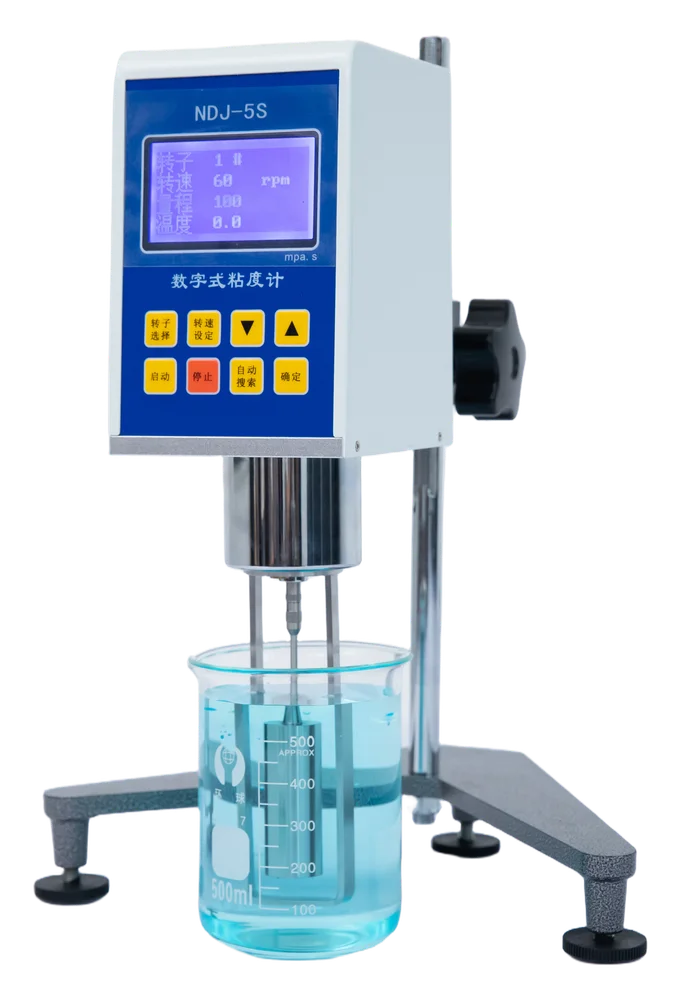
LCD Digital Rotational Viscometer
A backlit digital display and four preset speeds for routine viscosity checks, with temperature measurement alongside the viscosity reading.